WiTT
A social platform designed to bridge the gap between patients needing non-clinical support and their friends and family who want to help in meaningful ways.
Timeline
September 2022 - September 2023
WiTT enables people to help patients in their daily lives.
WiTT, which stands for "We're in This Together," is a social platform that makes it easy for patients to ask for the exact help they need, and for their friends and family to give in the way they choose to. Patients with chronic conditions face financial and non-financial challenges because insurance does not cover "non-clinical" costs of treatment. Loss of income increased out-of-pocket expenses, and socioeconomic conditions force patients to make difficult decisions about whether they will pay their rent, buy groceries, or receive life-saving medical care. In this challenging situation, patients can still feel hesitant to ask for help even though their friends and family would like the opportunity to support them.
Timeline
September 2022 - September 2023
WiTT enables people to help patients in their daily lives.
WiTT, which stands for "We're in This Together," is a social platform that makes it easy for patients to ask for the exact help they need, and for their friends and family to give in the way they choose to. Patients with chronic conditions face financial and non-financial challenges because insurance does not cover "non-clinical" costs of treatment. Loss of income increased out-of-pocket expenses, and socioeconomic conditions force patients to make difficult decisions about whether they will pay their rent, buy groceries, or receive life-saving medical care. In this challenging situation, patients can still feel hesitant to ask for help even though their friends and family would like the opportunity to support them.
Timeline
September 2022 - September 2023
WiTT enables people to help patients in their daily lives.
WiTT, which stands for "We're in This Together," is a social platform that makes it easy for patients to ask for the exact help they need, and for their friends and family to give in the way they choose to. Patients with chronic conditions face financial and non-financial challenges because insurance does not cover "non-clinical" costs of treatment. Loss of income increased out-of-pocket expenses, and socioeconomic conditions force patients to make difficult decisions about whether they will pay their rent, buy groceries, or receive life-saving medical care. In this challenging situation, patients can still feel hesitant to ask for help even though their friends and family would like the opportunity to support them.
Timeline
September 2022 - September 2023
WiTT enables people to help patients in their daily lives.
WiTT, which stands for "We're in This Together," is a social platform that makes it easy for patients to ask for the exact help they need, and for their friends and family to give in the way they choose to. Patients with chronic conditions face financial and non-financial challenges because insurance does not cover "non-clinical" costs of treatment. Loss of income increased out-of-pocket expenses, and socioeconomic conditions force patients to make difficult decisions about whether they will pay their rent, buy groceries, or receive life-saving medical care. In this challenging situation, patients can still feel hesitant to ask for help even though their friends and family would like the opportunity to support them.
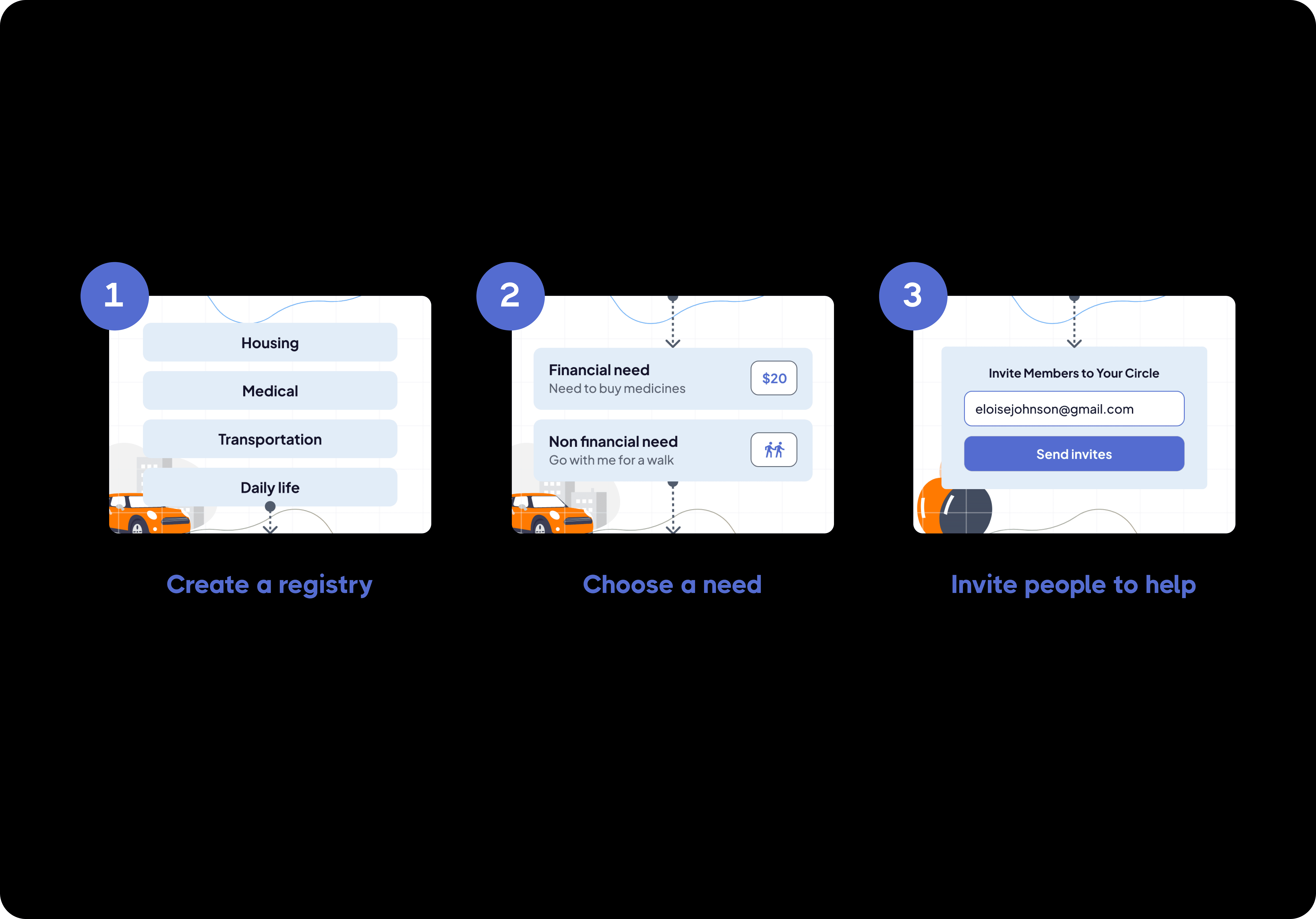
WiTT does this by combining concepts of a wedding registry with the personalized needs of a patient
The WiTT Support Registry™ removes the stigma of asking for help by letting patients list personalized needs in a simple wedding registry-like format. This also makes it easy for people to give. WITT has a unique combination of registry, health, and fintech tools that aims to alleviate the non-clinical aspects of care so that those challenges don't impact the care patients receive
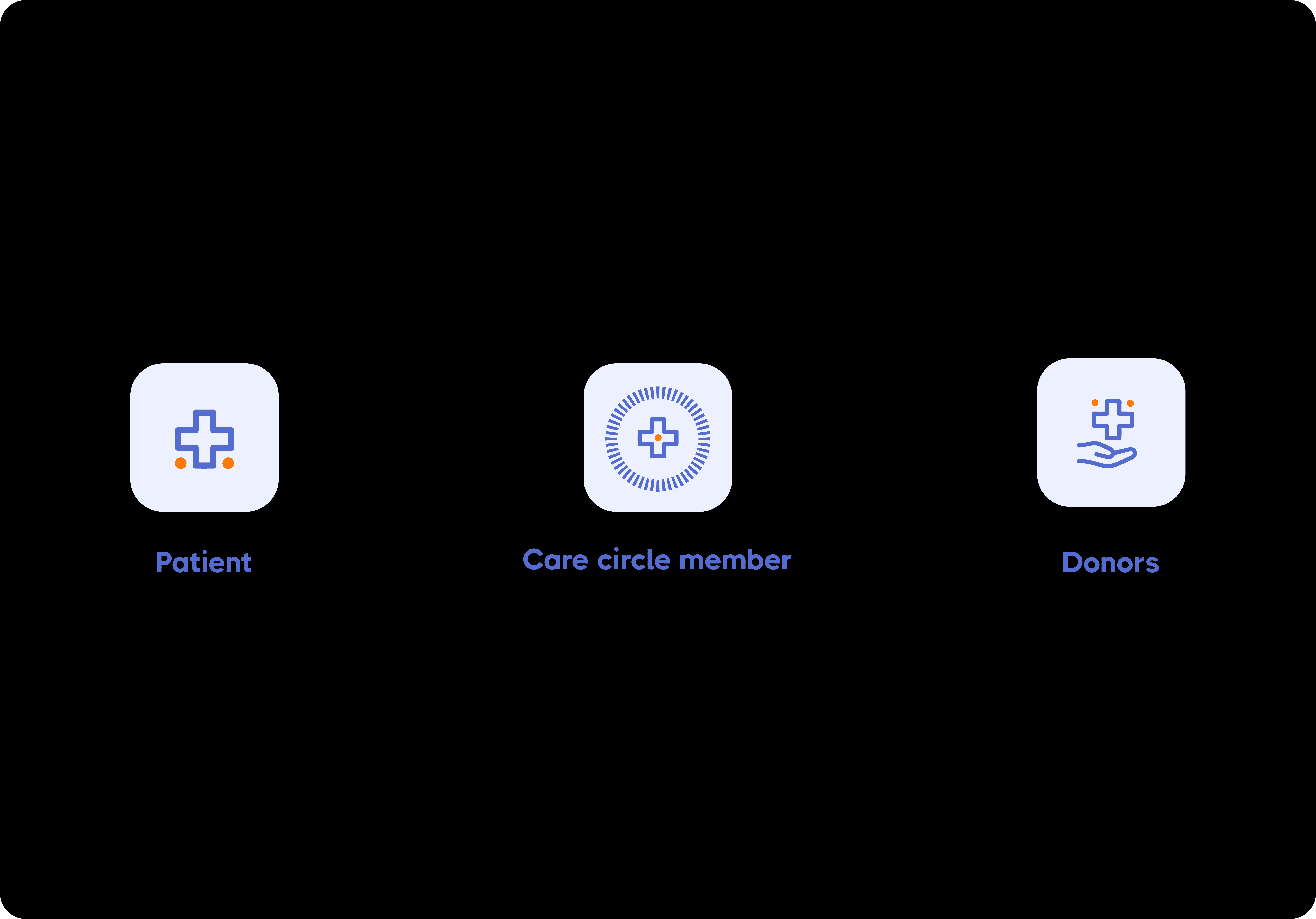
WiTT has three main personas. Patient, Donor & Care Circle member
When it comes to finding patients and registry items to donate to, it can be helpful to remember the perspectives of different personas involved in the process. These personas include the Patient, Donor, and Care Circle Member.
For the Patient persona, it's important to consider their unique needs and challenges. Patients may be dealing with physical, emotional, and financial difficulties, requiring specific items or resources to support their care. It's important to approach patients with empathy and understanding and respect their privacy and autonomy.
For the Donor persona, it's important to consider what motivates them to give. Donors may be driven by a desire to make a difference, to support a cause they care about, or to connect with others in their community. It's important to provide donors with clear information about how their contributions will be used and to express gratitude for their support.
For the Care Circle Member persona, it's important to consider their role in supporting patients. Care Circle Members may be friends, family members, or caregivers who provide emotional and practical support to patients. It's important to include Care Circle Members in the donation process and to provide them with clear information about it.
Let's look at 4 major user journeys that WiTT supports
WiTT is a community-driven platform that connects the needs of the patients to the donors who are able to provide the support, and its user journeys are tailored to support the needs of patients. By tailoring the onboarding process to the specific needs and preferences of each persona/role, we could improve their overall user experience and ensure that they are able to effectively use the system. By inviting people to a care circle, patients can receive the support they need to manage their healthcare needs and improve their overall well-being. By creating a registry, adding items, and sharing it with donors, you can gather donations more effectively and efficiently. Be sure to choose a platform that is user-friendly and easy to navigate, and make the registry accessible to potential donors through multiple channels. By taking these steps, you can find patients and registry items to donate to and make a positive impact on the lives of others. Remember to do your research and choose causes and patients that align with your interests and values.
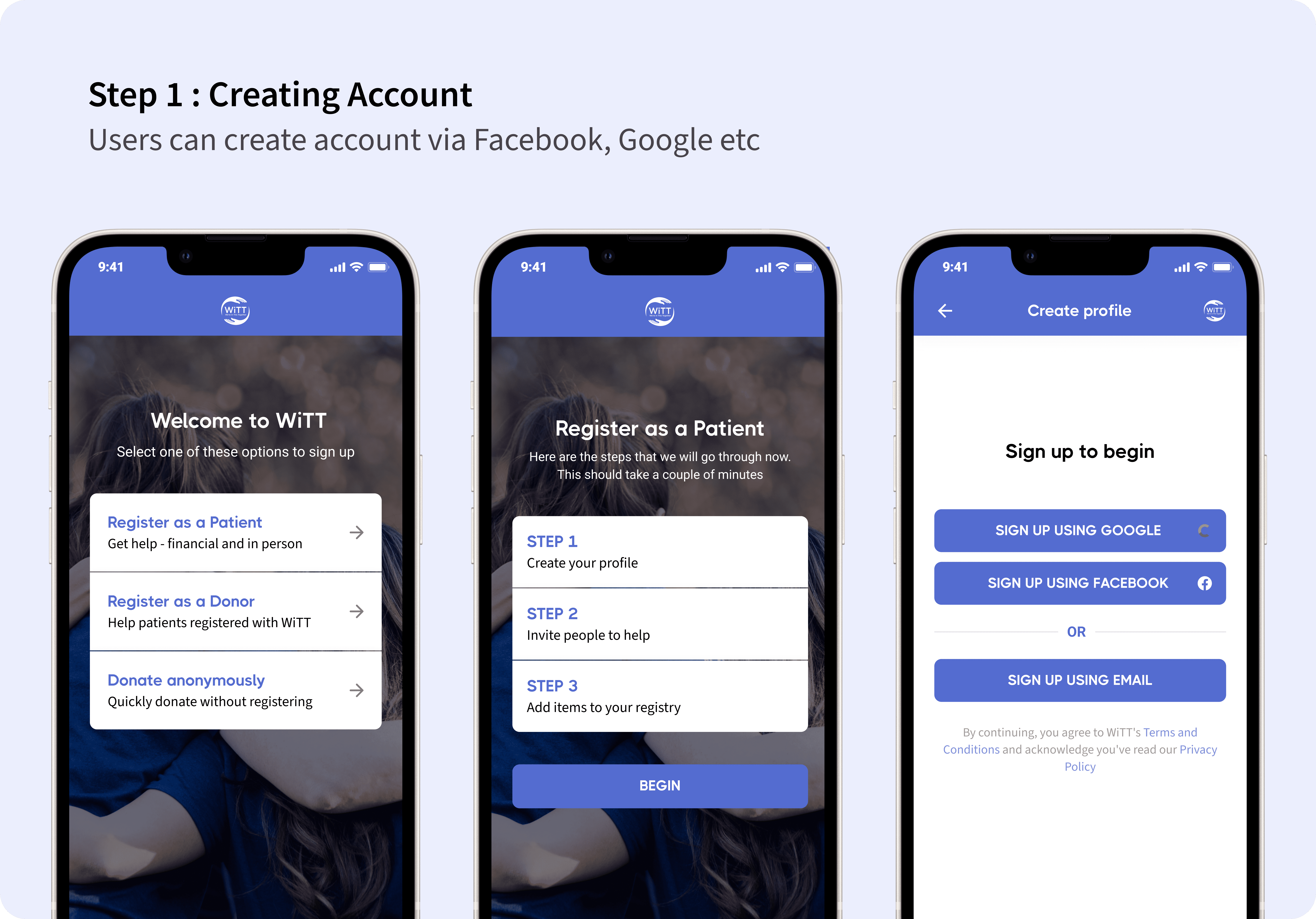
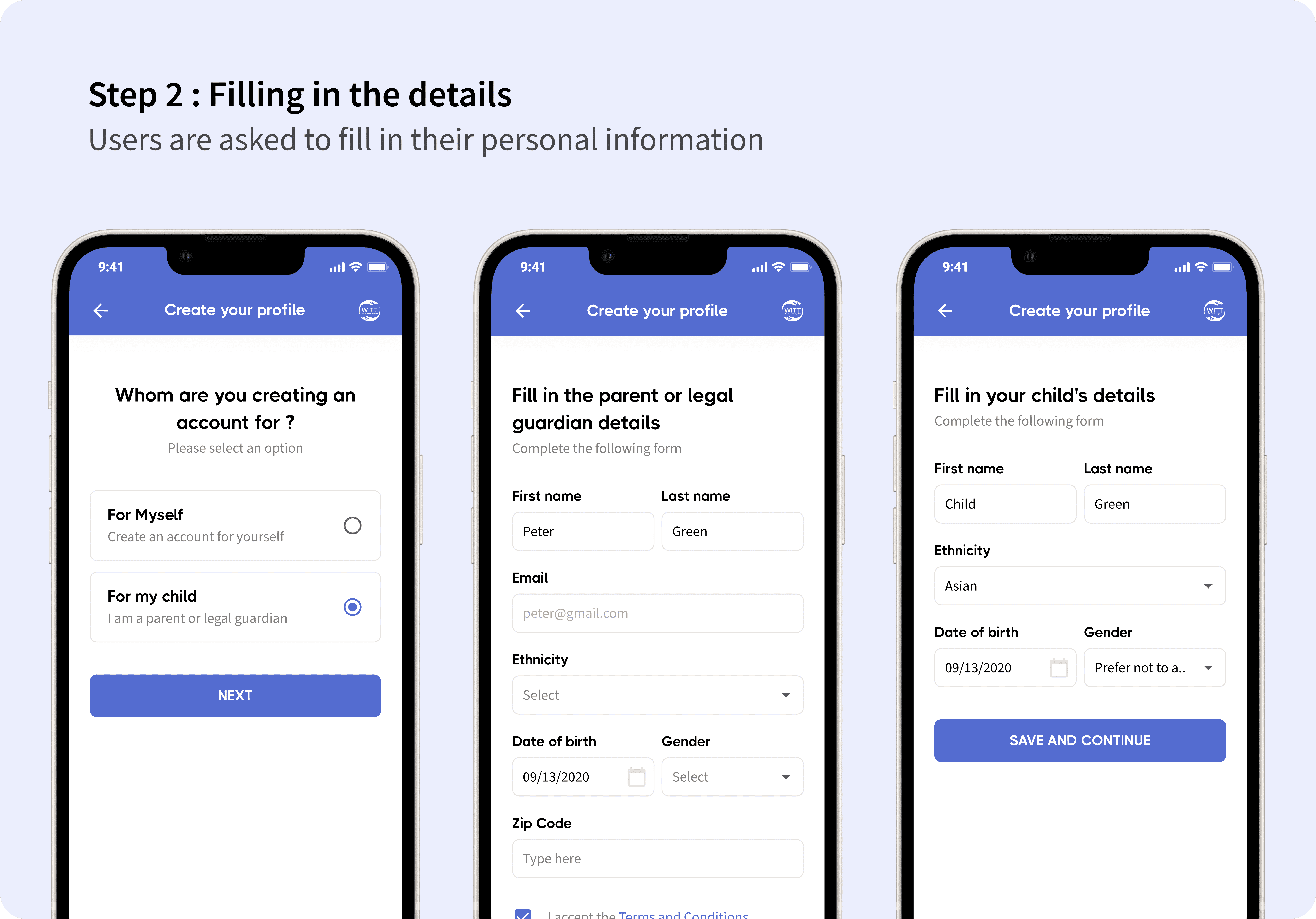
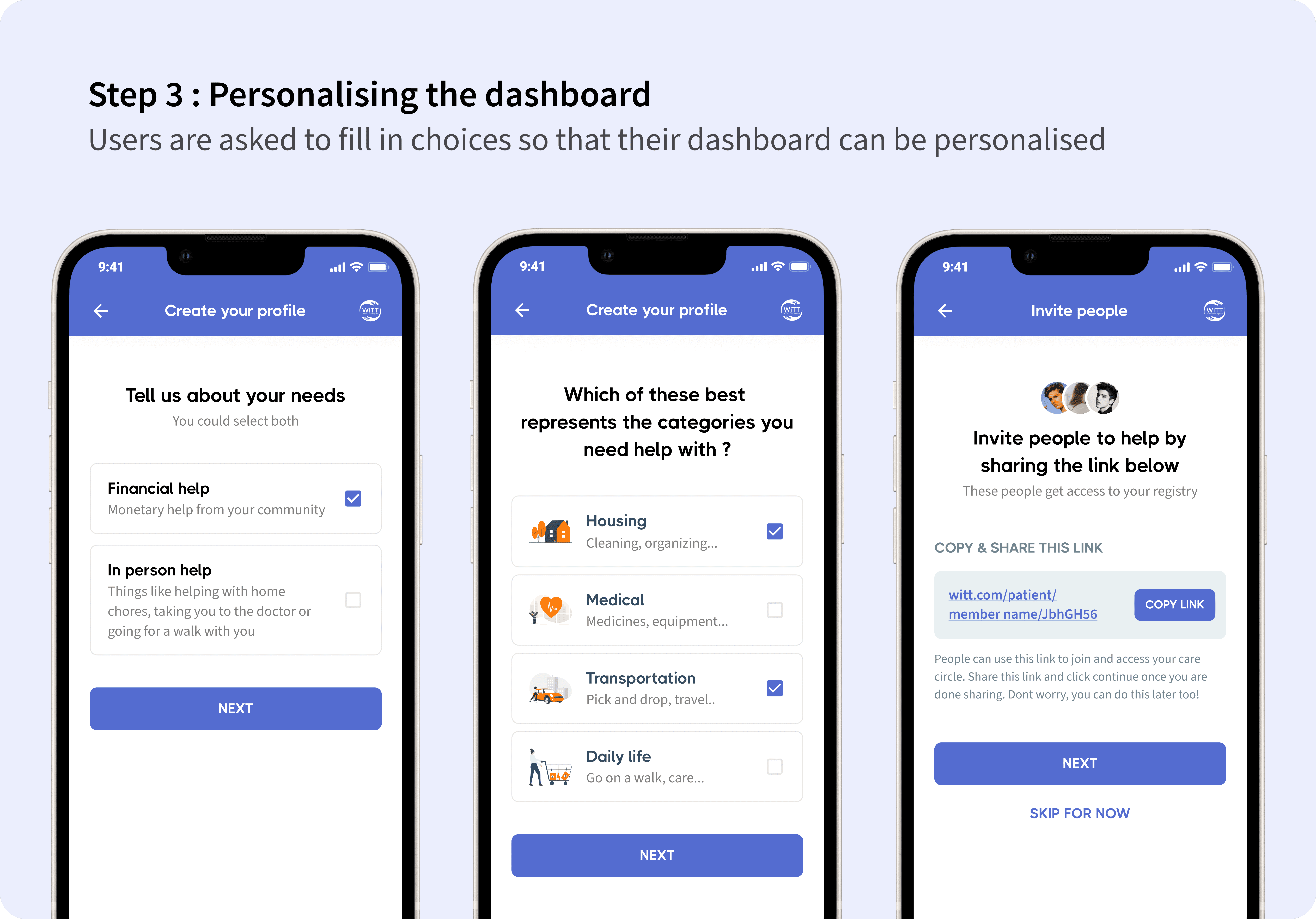
User Journey 1: Onboarding different personas/roles into the system
User Problem
With onboarding for multiple users, different users may have different levels of familiarity with the application and different needs and preferences. This can make it challenging to create an onboarding process that effectively meets the needs of all users.
Proposed Solution
This can include features such as session management, which allows users to log out of active sessions and log in from a trusted device. Additionally, platforms should implement security measures, such as two-factor authentication, to further protect users' accounts.

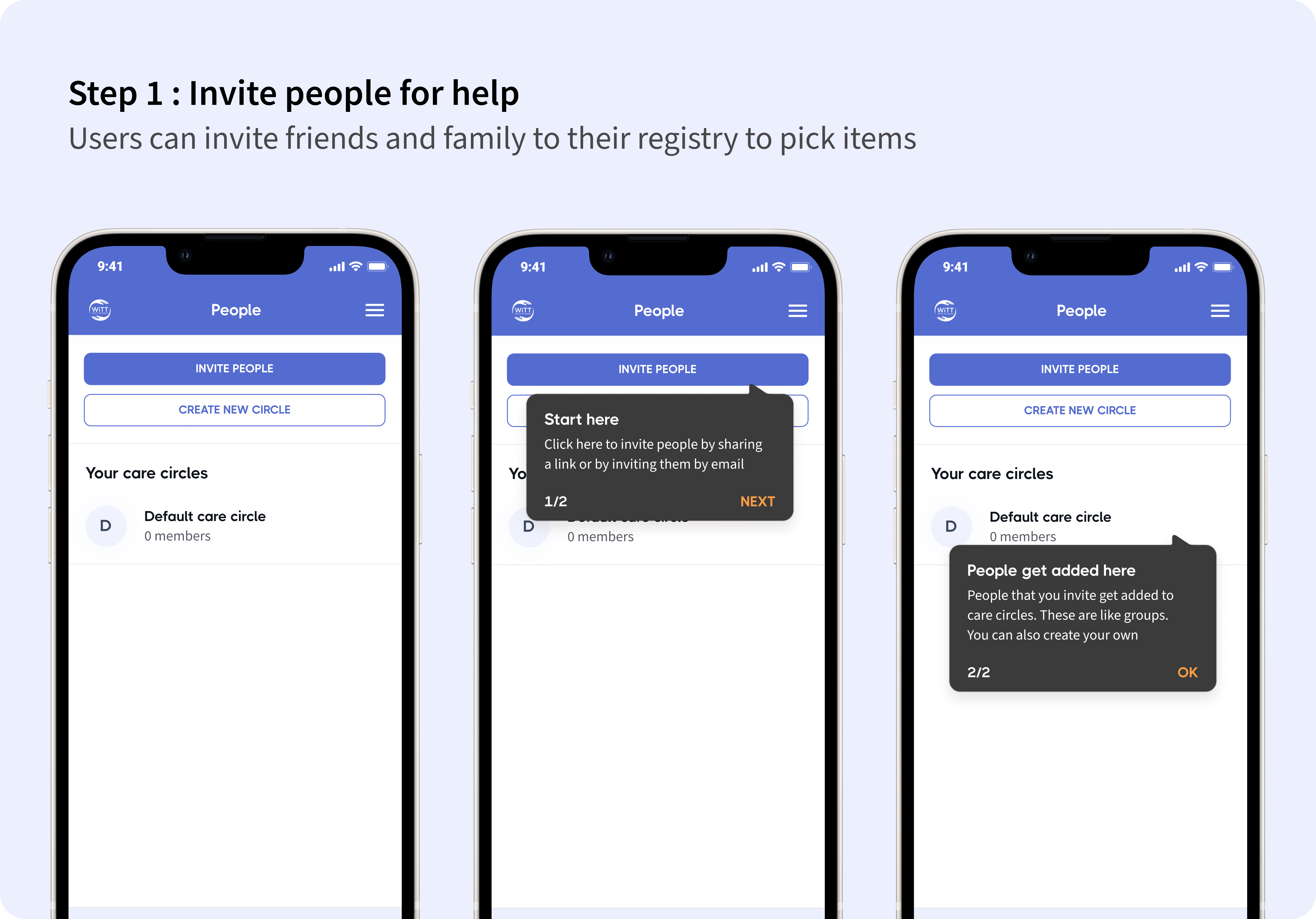
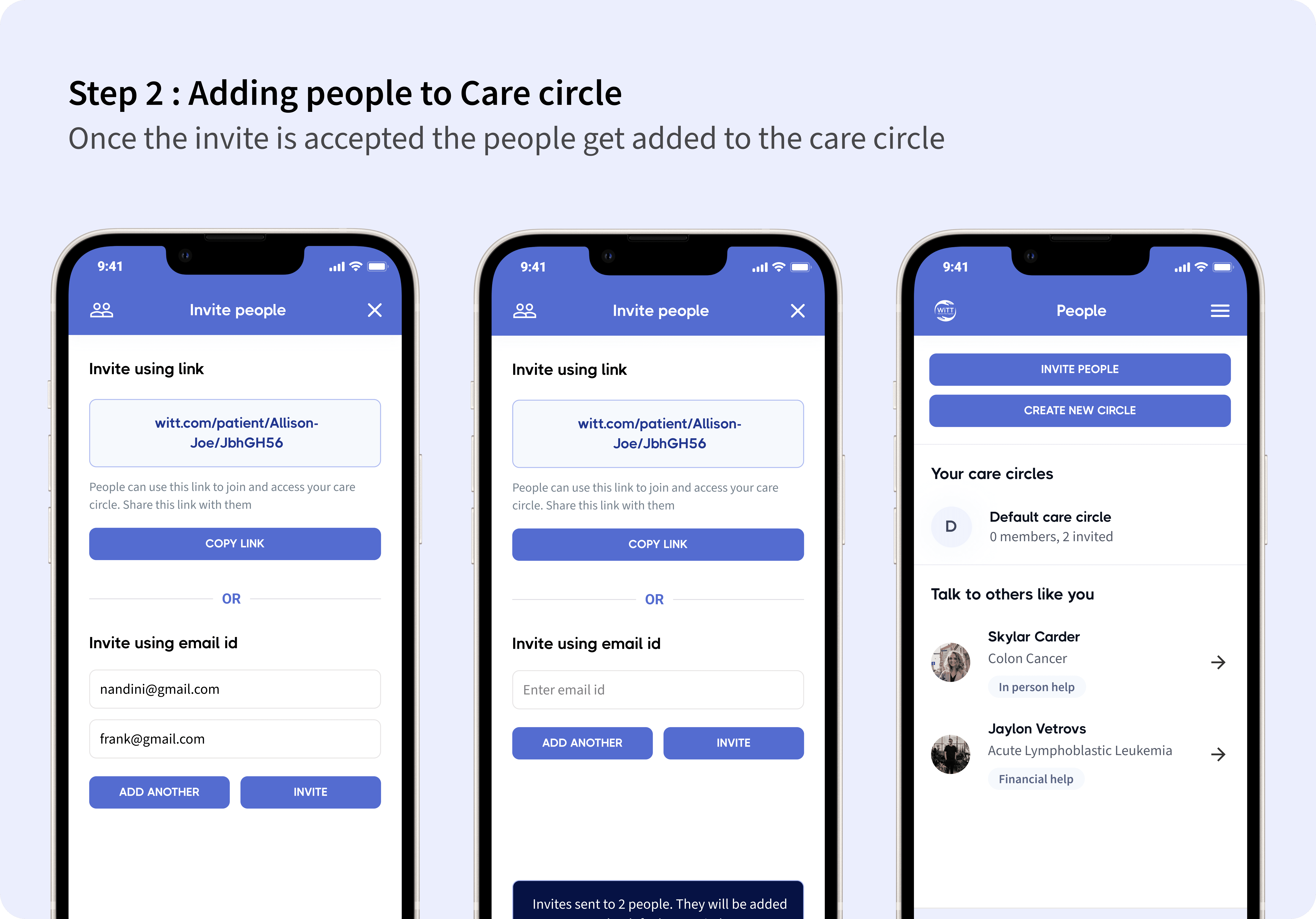
User Journey 2: Inviting people to a care circle to support the patients
User problem
The problem of inviting people to a closed circle refers to the challenge of extending membership in a private or exclusive group to new individuals. A closed circle may be a social group, a professional network, or a community with restricted membership.
Proposed Solution
It's important to have a clear and consistent process for inviting new members to the closed circle. This process should consider factors such as the group's purpose, the criteria for membership, the screening process for new members, and the methods for integrating new members into the group. By carefully managing the process of inviting people to a closed circle, the group can maintain its exclusivity, trust, and purpose while also benefiting from the addition of new members.
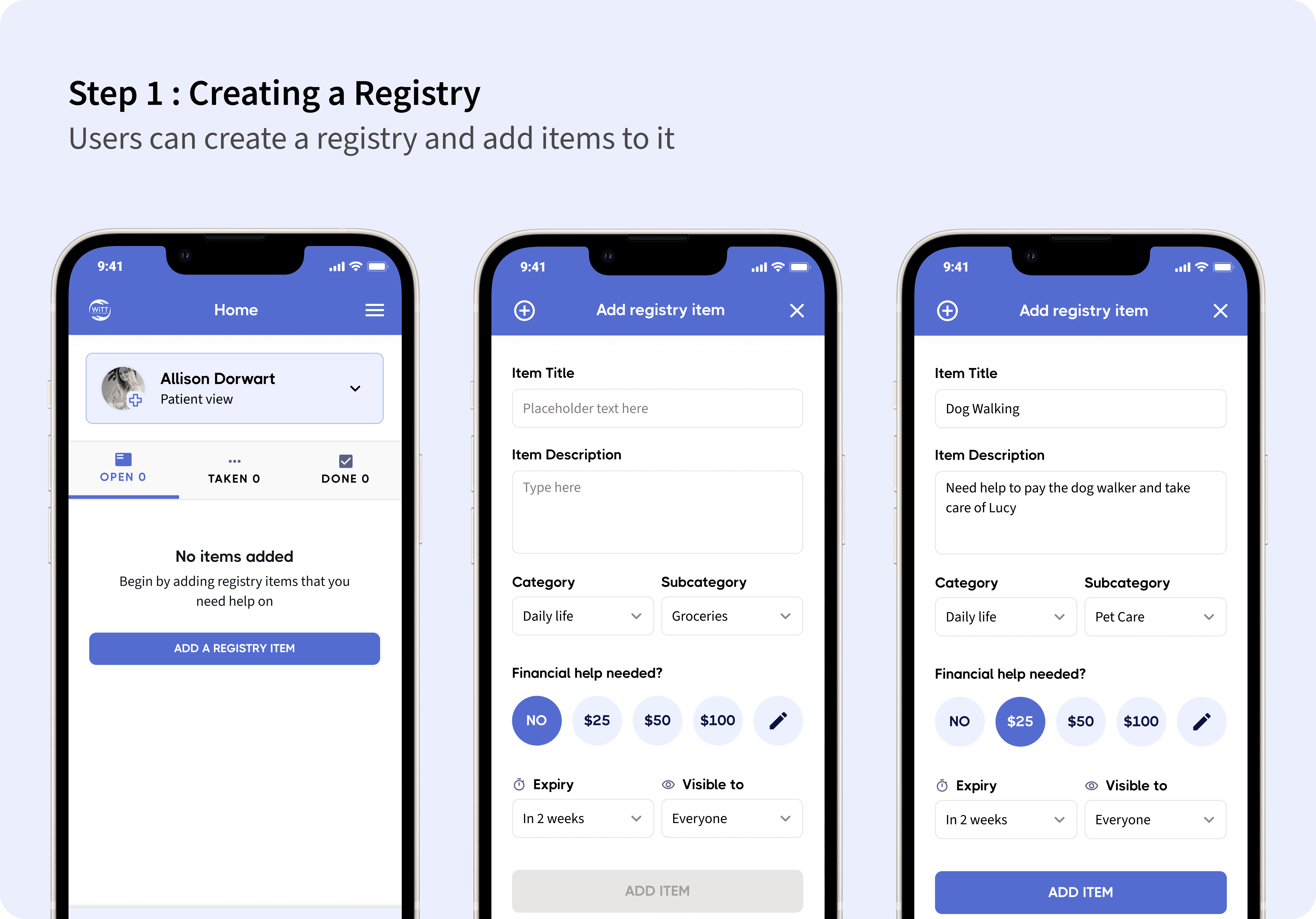
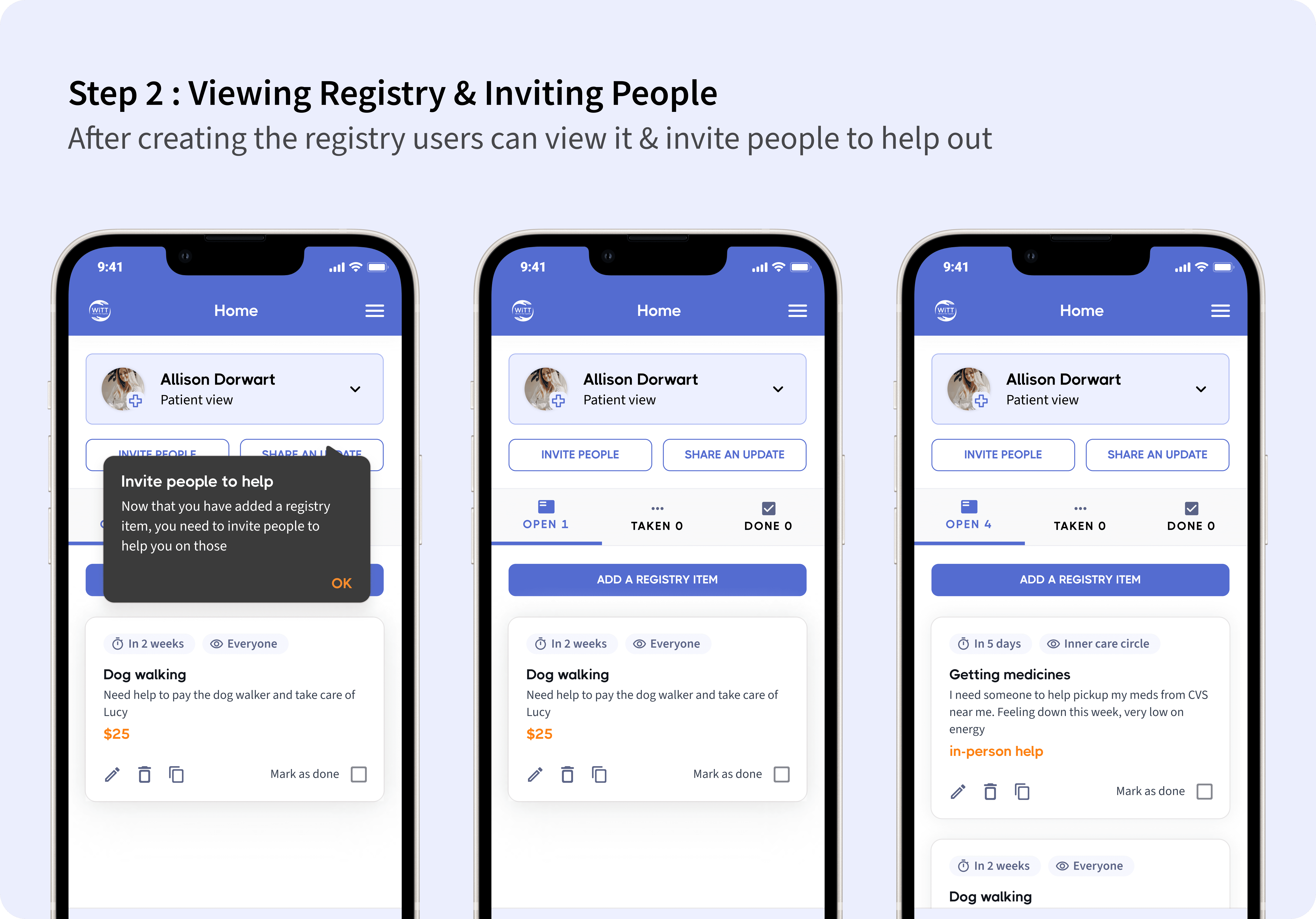
User Journey 3: Creating a registry, adding items, and sharing them with donors
User Problem
In order to provide assistance to those in need, it's important to have a method for identifying individuals or families who are struggling and could benefit from the registry. This can involve outreach efforts, community partnerships, and other means of identifying those who need help.
Proposed Solution
By addressing these challenges, a registry specifically for those in need can help provide essential items to individuals and families who are struggling, helping to improve their quality of life and support their well-being.
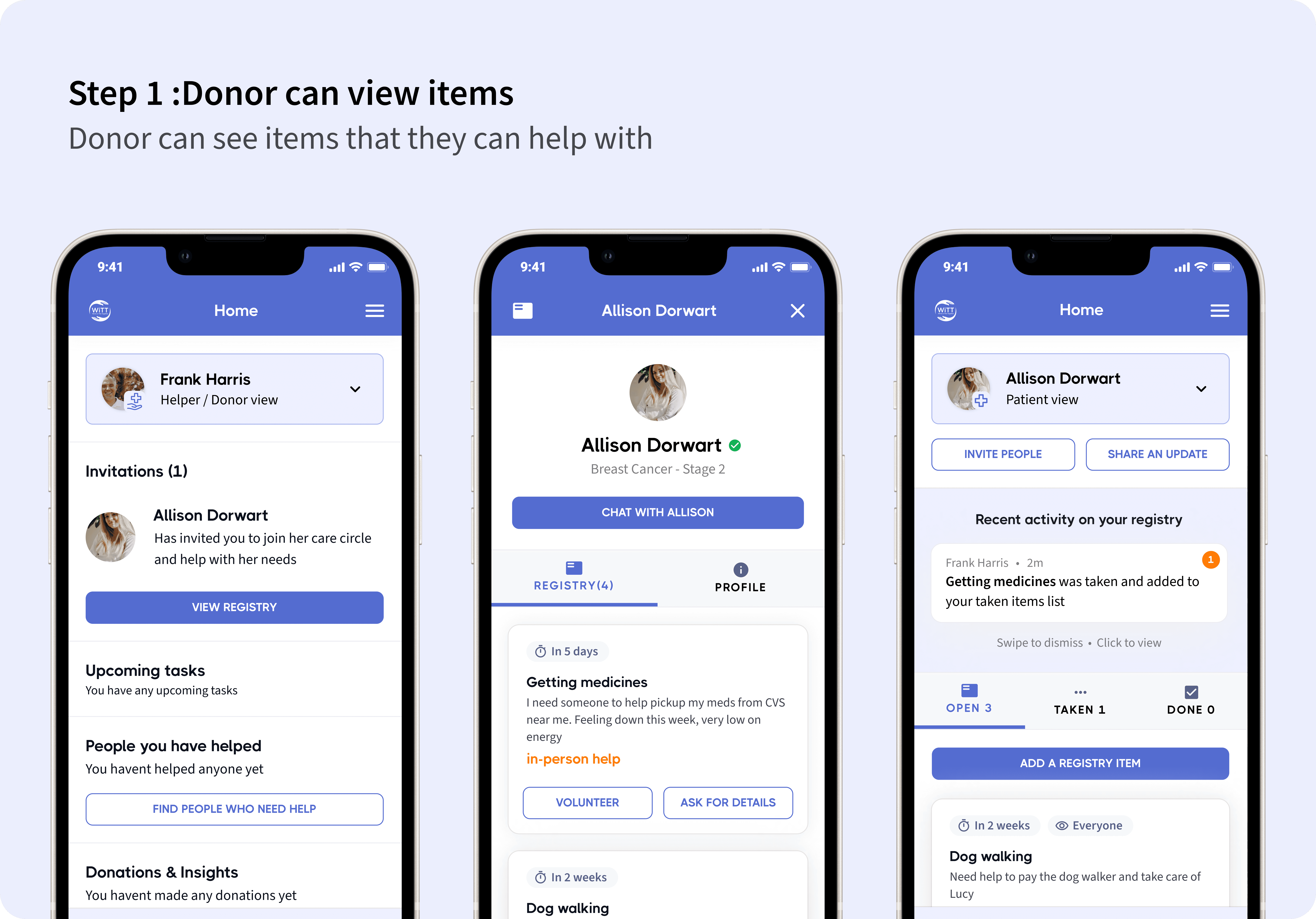
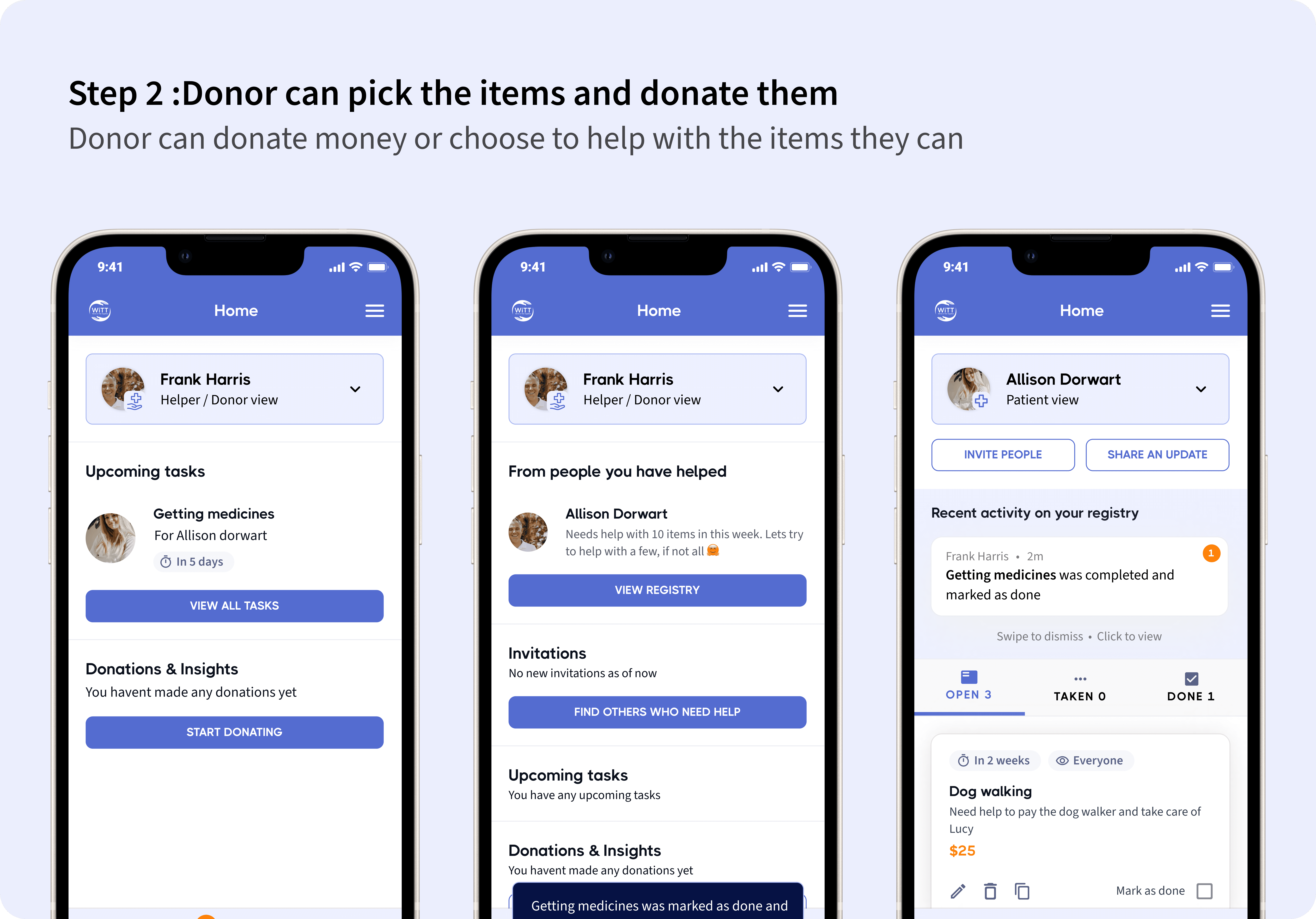
User Journey 4: Find patients & registry items to donate to.
User Problem
The problem of donor view refers to the challenge of creating a user experience that effectively communicates the impact of a donor's contributions to a charitable organization or non-profit. A donor view is typically a dashboard or portal that provides information about the donor's giving history, the organizations they have supported, and the impact of their donations.
Proposed Solution
By addressing these challenges, a well-designed donor view can help build trust and engagement with donors, increase transparency and accountability, and support the fundraising efforts of a charitable organization or non-profit.
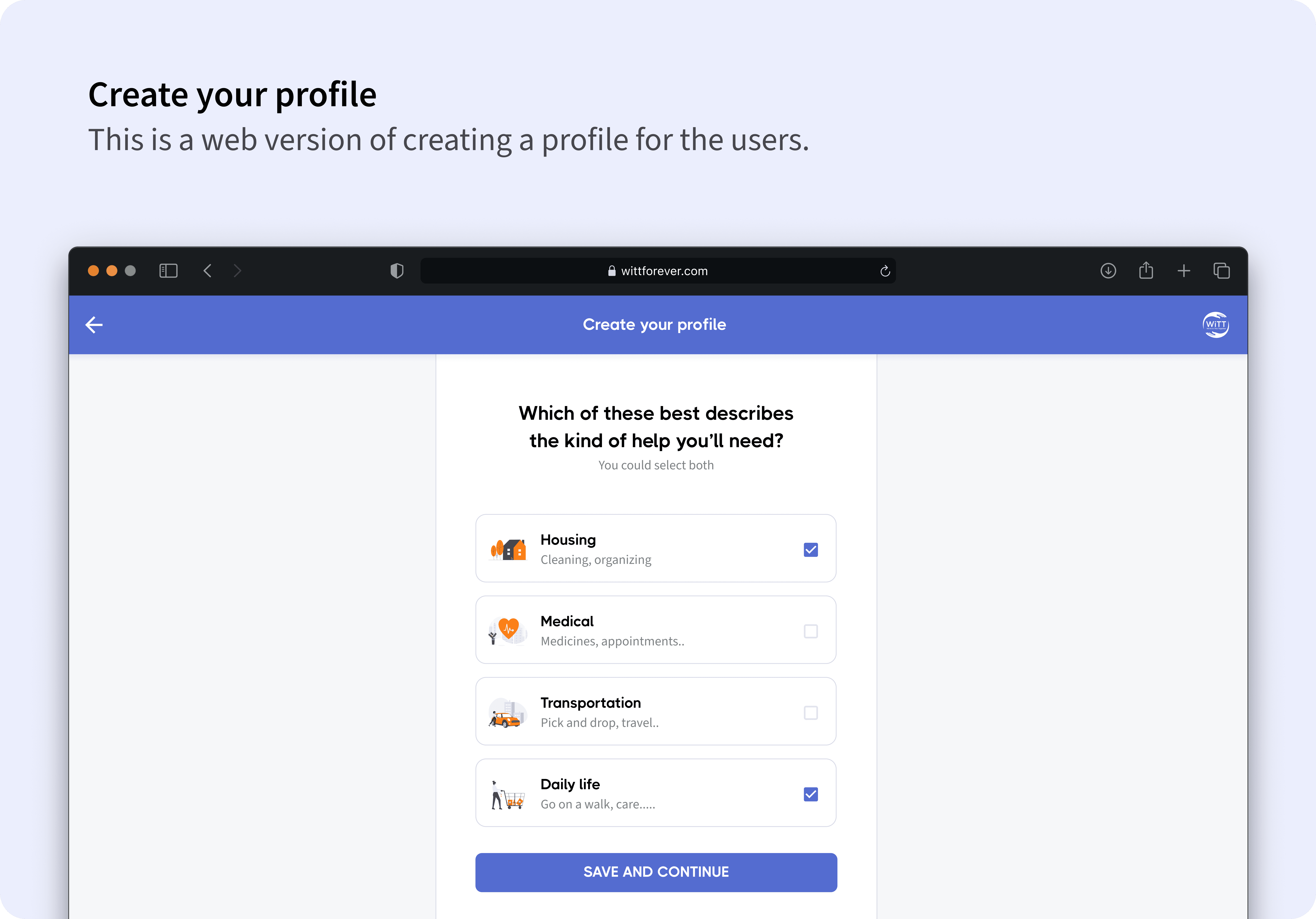
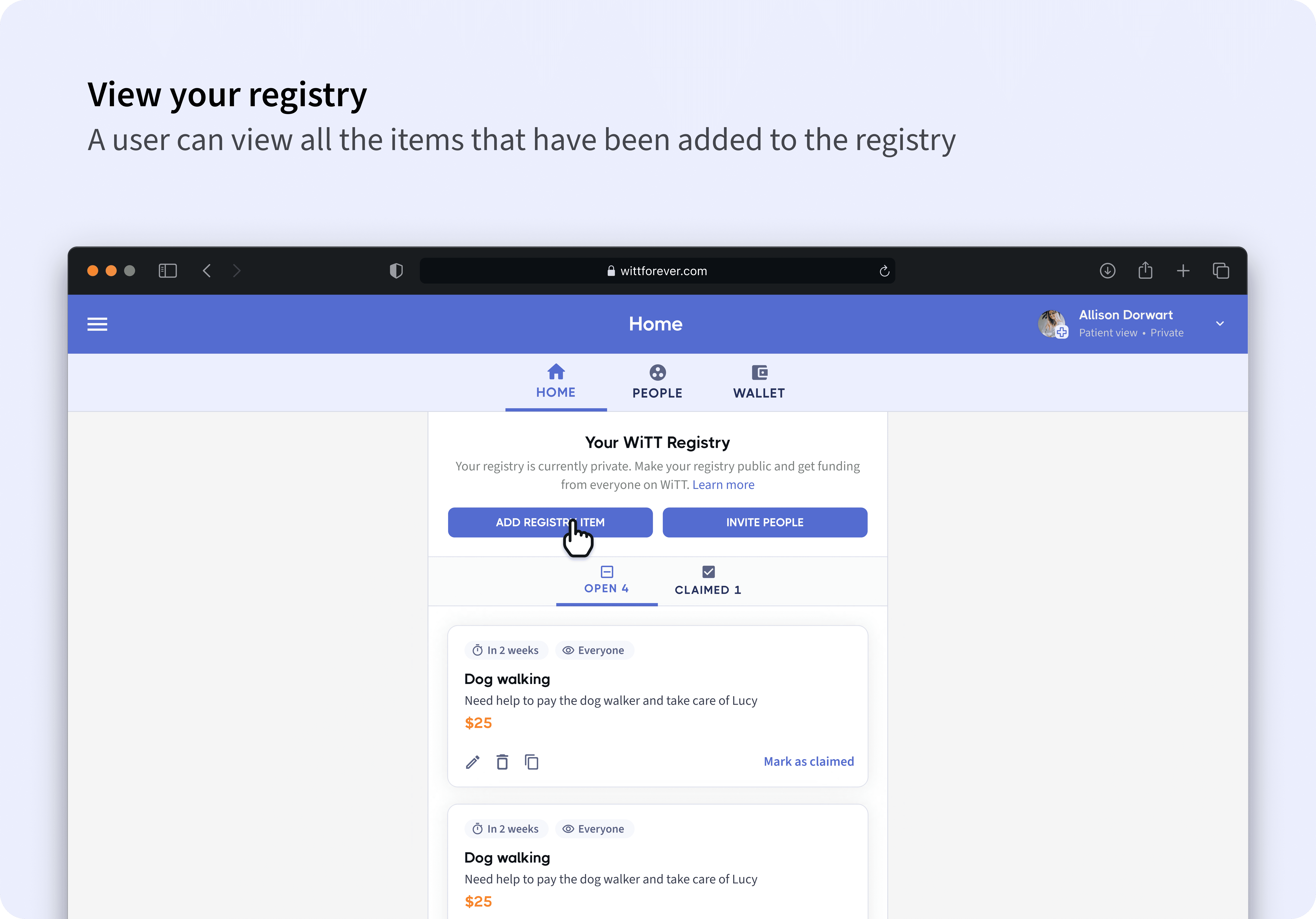
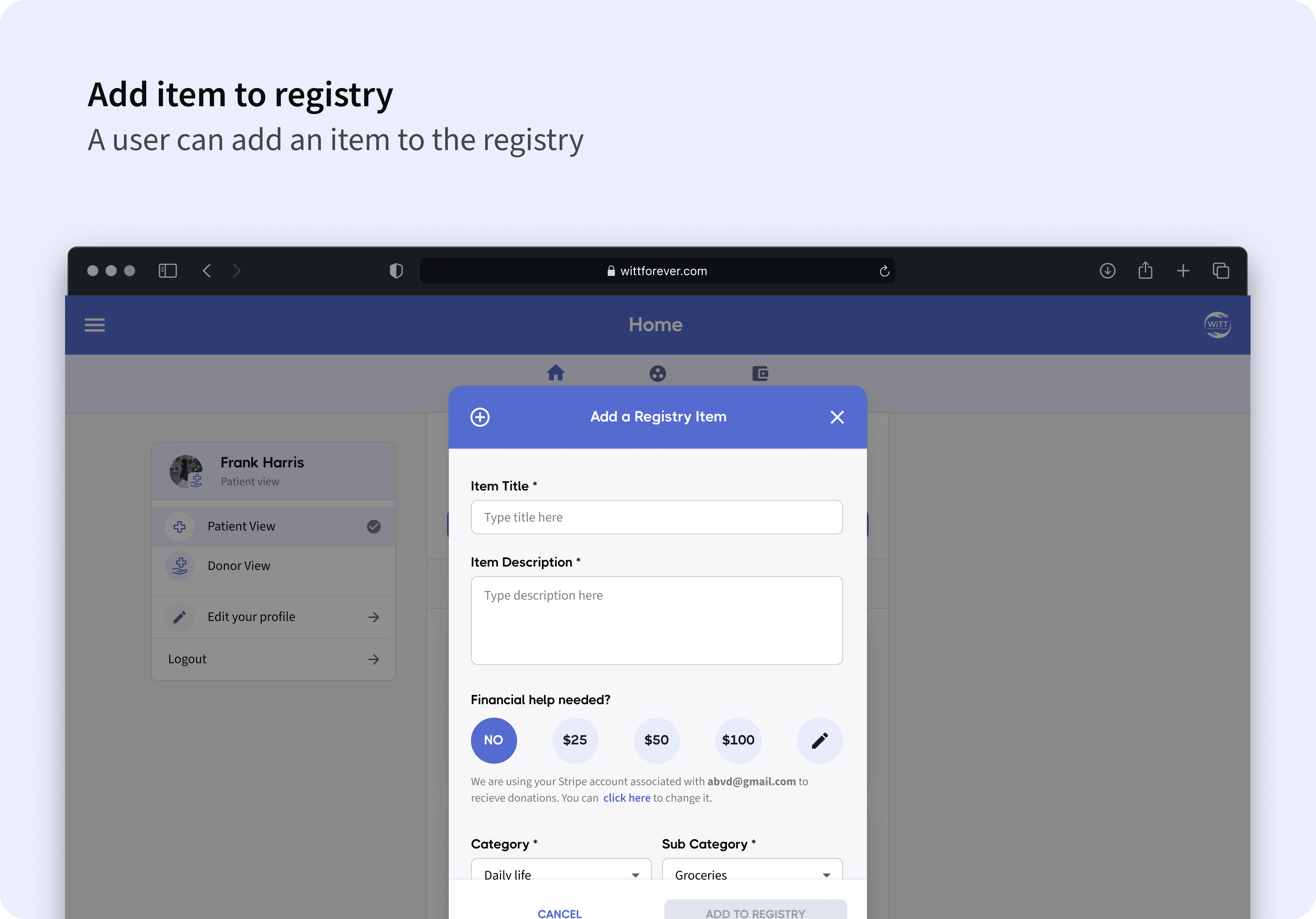
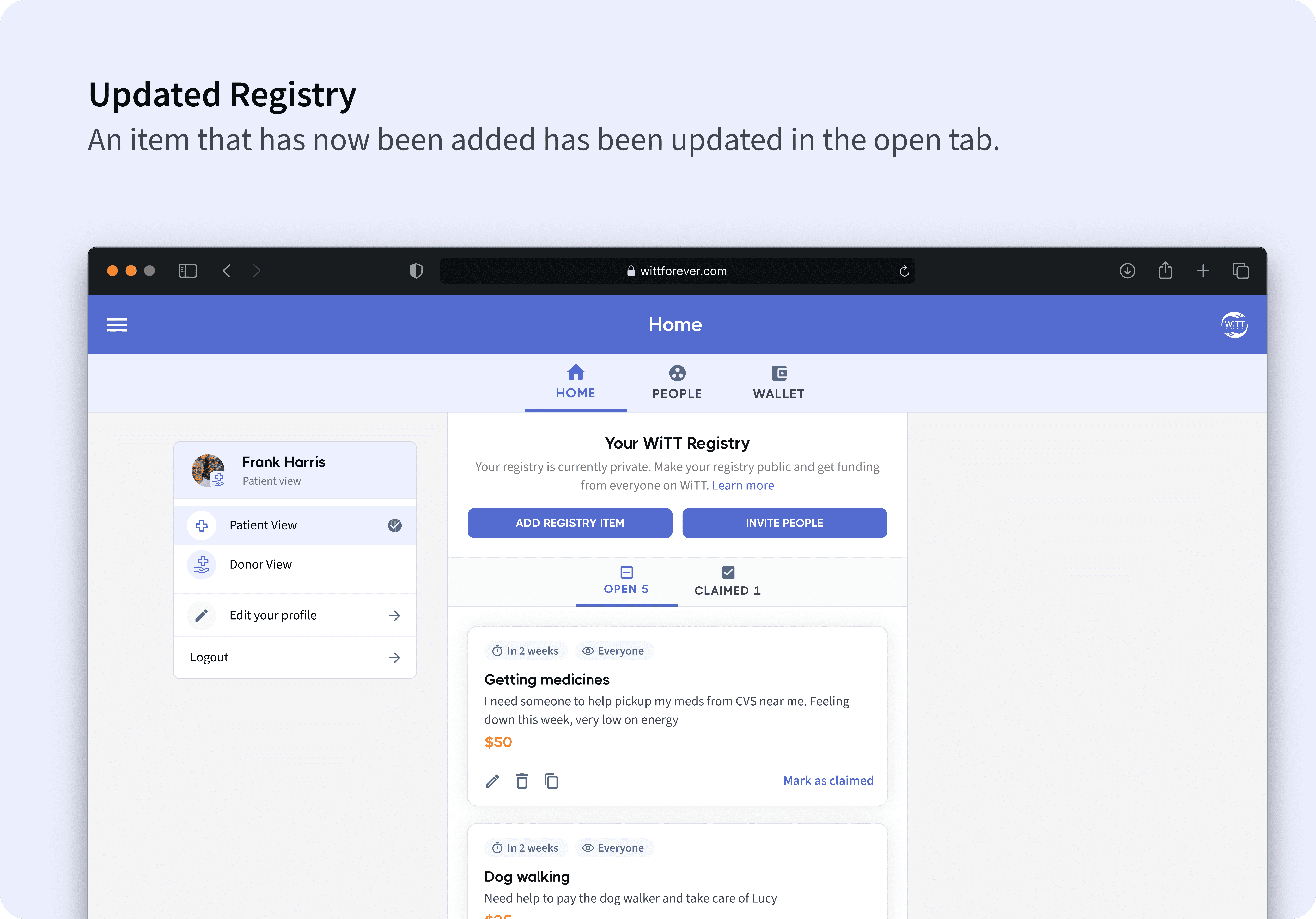
We also designed a desktop version of WiTT, ensuring a cohesive experience across platforms. Here are some visuals showcasing the user interface and design elements tailored for desktop users
Key Takeaways:
Below are a few learnings that I gained that made me understand the importance of prioritizing user needs, simplifying interactions, and using data to drive design improvements
Focusing on user-centric design enhances user success and satisfaction, as demonstrated by the ease with which users add registry items.
Streamlining processes through clear and engaging design can significantly improve efficiency and completion rates, particularly for tasks like donations.
Gathering and analyzing user feedback and behavior is crucial for refining the user experience and effectively communicating the platform's value.